
How Digestion Works
So many of my clients ask me what they can and can’t eat when they have gut issues. The problem with this thinking is that it isn’t that simple.
Is it gluten? Dairy? FODMAPs? Do I need more fibre?
Removing FODMAPs, gluten and dairy can make you feel better and feel healthier. But it’s often a short-term solution. Addressing WHY your body isn’t tolerating them is where to focus.
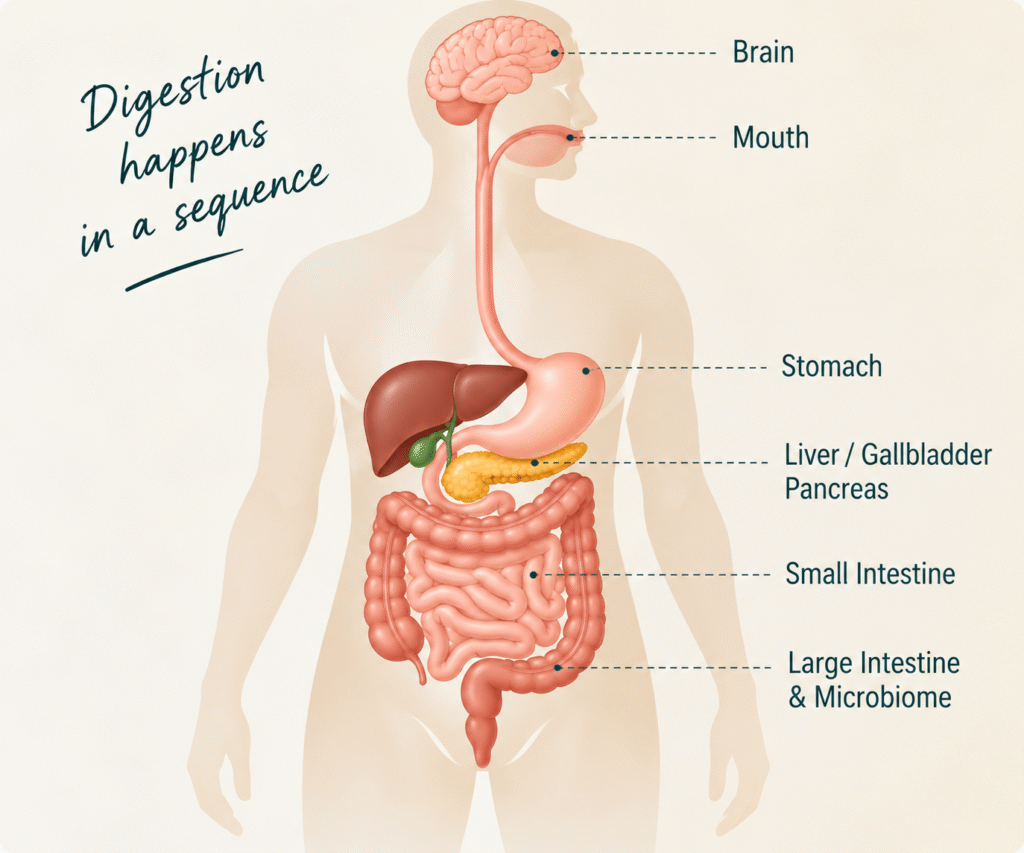
Food does matter, but digestion involves much more than what you eat. Your brain, nervous system, stomach, liver, gallbladder, pancreas, intestines and microbiome all play a role. Stress, sleep and even how you eat can change the way your digestive system functions and change the picture entirely.
Most importantly, digestion happens in a sequence.
Digestion Starts Before You Eat
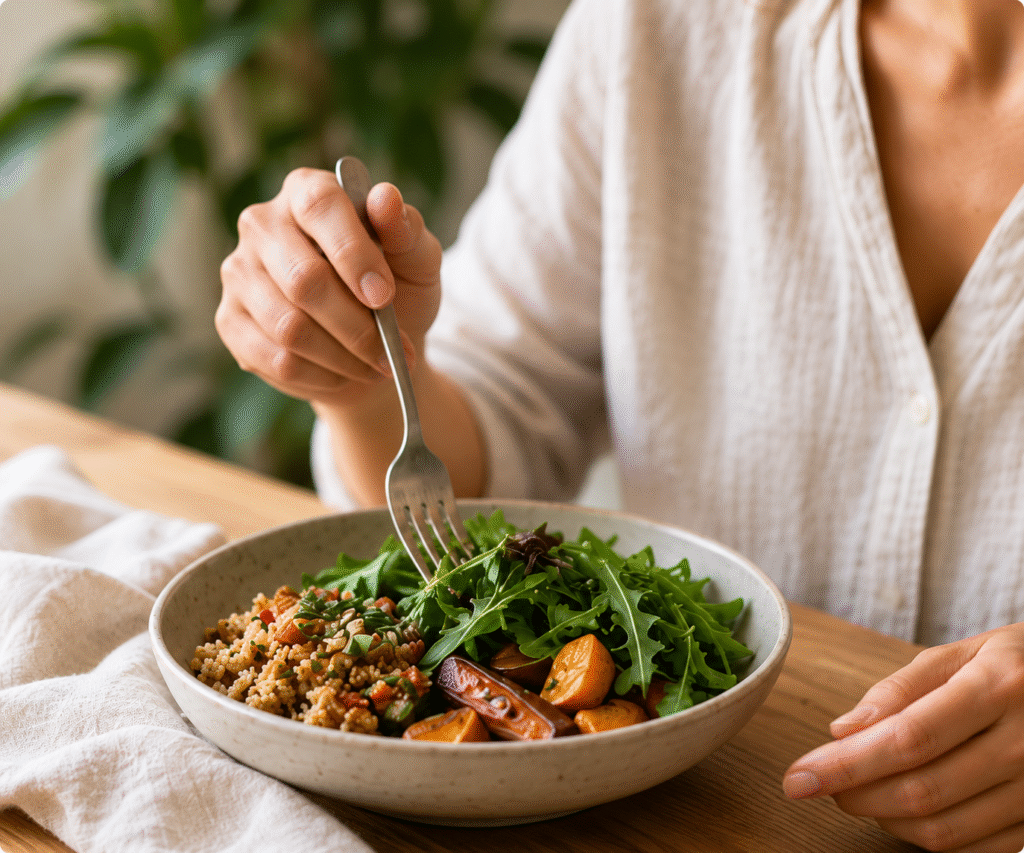
Digestion actually begins before food reaches your mouth.
Seeing, smelling, thinking about and preparing food helps signal to your digestive system that food is coming. Once you start eating, chewing and saliva begin the physical and chemical breakdown of your meal.
This means how you approach a meal can matter too.
Why I Look at Digestion from the Top Down
The microbiome gets a lot of attention, but it’s toward the end of the digestive process.
There’s so much that the body does with food before it even reaches the microbiome that is just as (if not more) important.
If something isn’t working efficiently earlier in digestion, it can influence what happens further down.
That’s why I generally like to start at the top and work down. Reducing fermentable foods changes what the microbiome can do and reduces the symptoms. But this may just be hiding the underlying cause.
Stress and How You Eat Matter
Until relatively recently, eating looked very different. I can’t imagine our ancestors were scoffing down food while answering emails, driving places and scrolling through their phones. They literally couldn’t.
They slowed down, enjoyed their food and at most, enjoyed company and conversation.
Being on our phones, driving and answering messages may not sound stressful, but they pull focus away from digestion and can change how food enters the stomach.
What About Stomach Acid?
Having enough stomach acid is so important! Clinically I’ve seen more people with not enough compared to too much.
It helps break down protein, activates digestive enzymes, helps coordinate bile flow, regulates the speed of the gut and forms a vital infection defence system.
AND, did you know that low stomach acid can cause bloating, reflux and heartburn?? Weird right?
That doesn’t mean everyone with reflux or bloating has low stomach acid – but it is something that has to be considered.
When Do You Get Bloated?
The timing after meals is so important.
Is it 30 minutes later? 90 minutes?
Or is it always at the end of the day or the start of the day. These are all clues that can help tell us where to look first.
Food Does More Than Provide Calories
Protein, fat, carbohydrates and fibre all require different digestive processes.
Protein relies heavily on the stomach and pancreas. Fat relies on the liver, gallbladder and pancreas. Carbohydrates rely on the upper gut and fibre continues into the colon where it can feed our gut bacteria.
What you eat, the symptoms you experience afterwards and when those symptoms appear can all give us clues about where to look.
Your Gut Needs Sleep Too
Sleep affects far more than energy levels.
Sleep rhythms help control your nervous system, metabolism, appetite, immune function and gastrointestinal function.
And it works both ways: digestive problems can alter sleep, and poor sleep can alter digestion.
The Microbiome and FODMAPs
Finally, we reach the microbiome.
A low-FODMAP diet is good at reducing digestive and IBS (irritable bowel syndrome) symptoms. But reducing fermentation by removing foods doesn’t explain why those foods became difficult to tolerate in the first place.
We need to ask why these foods are causing symptoms. FODMAP fermentation should be one of the later stages of the digestive process, but in some individuals, this isn’t always the case.
The goal should almost always be to build tolerance and dietary variety rather than restriction. Life is so much better when you don’t have to worry about what you can or can’t eat.
The Big Picture
Digestion isn’t one organ and it isn’t one process.
Stress → eating → chewing → stomach → bile → enzymes → absorption → motility → microbiome (FODMAPs) → bowel movements.
Each stage influences the next.
There is often a reason behind why your gut is feeling the way it is. It just sometimes takes some investigation.